
Generative engine optimization examples that actually work
GEO is easier to grasp with concrete examples. Here are realistic patterns — across content, technical and off-site work — that move a brand into AI answers.
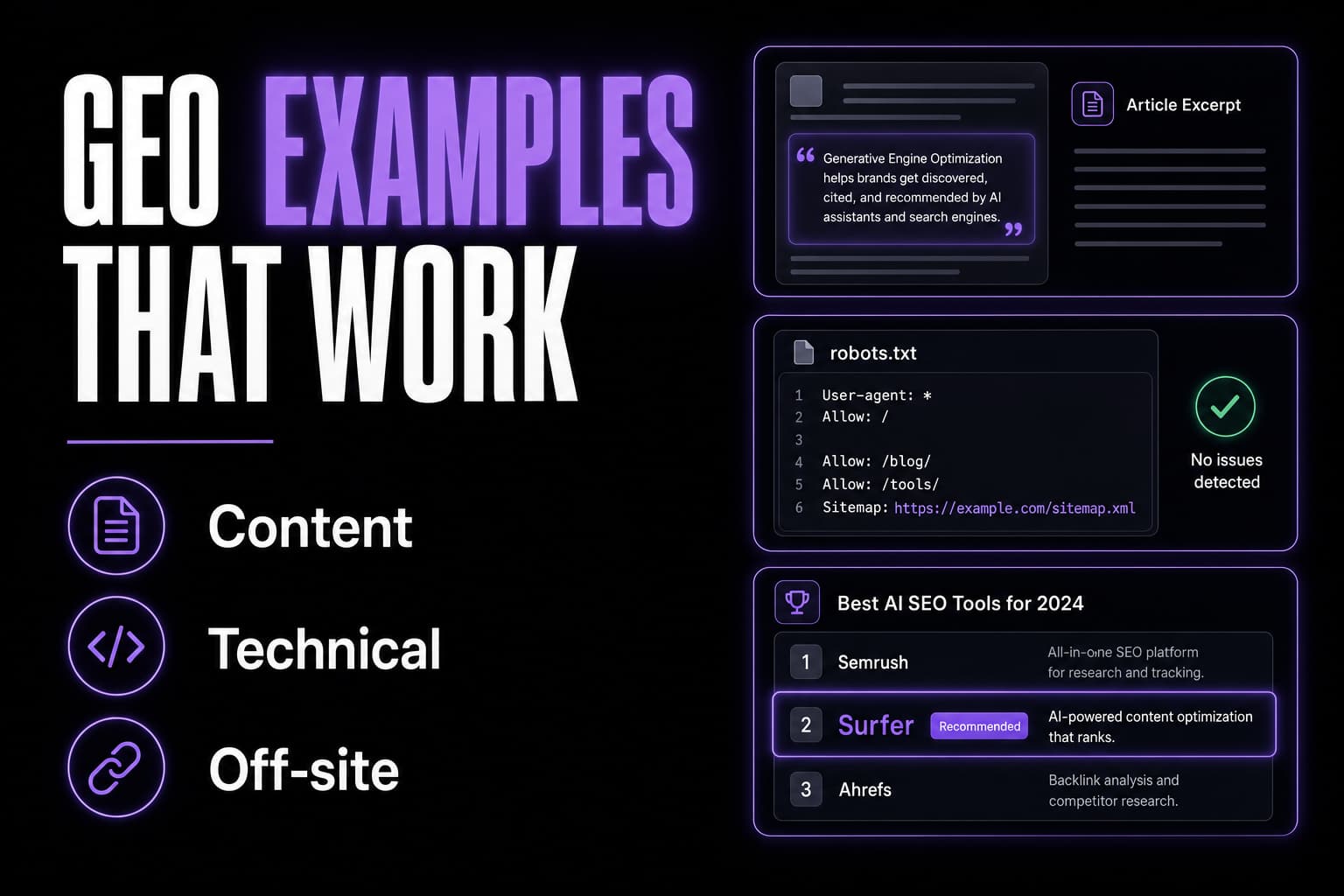
Content examples: making a page quotable
The clearest GEO wins come from restructuring content so a model can lift it. A clinic whose service page opened with a marketing slogan rewrote it to answer the actual question — 'How much does a hair transplant in Istanbul cost, and what's included?' — in the first two sentences, followed by a clear table. That single change made the page quotable, and it started appearing as a cited source for cost-related prompts.
The pattern generalizes: lead with the answer, state facts plainly, use tables and lists, and remove the preamble a model can't quote. Pages that read like a confident, structured answer beat pages that read like a brochure.
Technical examples: getting retrieved at all
Some of the highest-impact GEO work is invisible to readers. A SaaS company discovered its robots.txt was blocking GPTBot — so no matter how good its content was, ChatGPT could never retrieve it. Unblocking AI crawlers and ensuring pages rendered server-side (not only via client JavaScript) put its documentation back into the candidate set, and citations followed.
Other technical patterns that move the needle: fast, clean pages; structured data that states what the entity is; and canonical, crawlable URLs instead of content trapped behind interactions a crawler can't perform.
Off-site examples: earning the consensus
Often the winning move isn't on your site at all. When an engine answers 'best data integration tools', it leans on third-party roundups and review sites. A vendor absent from those lists was simply never in the answer — not because its product was worse, but because the sources the model trusts didn't mention it. Getting added to the relevant roundups and review platforms changed which brands the model named.
This is the off-site lever: the engines reward consensus across sources they trust, so being mentioned where they already look is frequently more powerful than anything you publish yourself.
The thread connecting them
Every example reduces to the same logic: be retrievable, be quotable, be mentioned. What makes GEO a discipline rather than a guess is knowing which lever to pull for a given prompt — and that comes from measurement. CiteLens shows you, per prompt, whether you're named and cited and who's winning instead, so you can apply the right example to your actual gaps rather than copying tactics blindly.
Alper Tekin is the founder of CiteLens, a GEO and AI-visibility platform. He researches how AI engines like ChatGPT, Perplexity, Claude and Google's AI Overviews decide which brands to recommend and which sources to cite, and writes about generative engine optimization based on original data.