
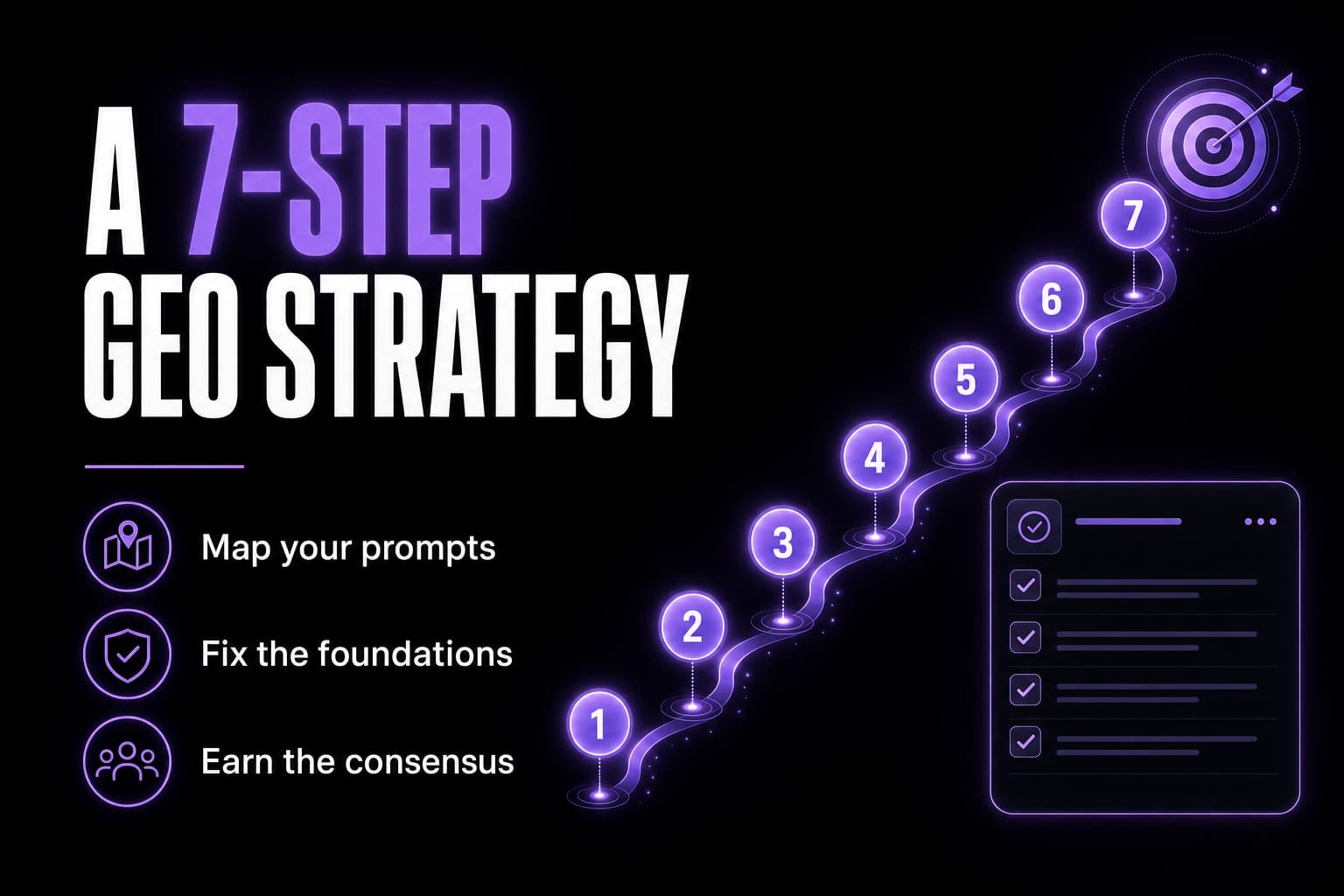
A 7-step generative engine optimization strategy
GEO isn't a checklist of hacks — it's a strategy. Here's a seven-step framework to systematically grow how often AI engines recommend and cite your brand.
Why GEO needs a strategy, not tactics
It's tempting to treat generative engine optimization as a bag of tricks — add schema, tweak a title, block or unblock a crawler. But isolated tactics don't compound. The brands that win inside AI answers treat GEO as an ongoing strategy with a clear sequence: understand where you stand, fix the foundations, earn trust, and measure relentlessly. The seven steps below are that sequence.
The seven steps
Each step builds on the one before it. Skipping ahead — say, chasing mentions before your site is even crawlable — wastes effort.
- 1. Define your prompt universe — the real questions buyers ask AI in your category. This is your battlefield; everything else is measured against it.
- 2. Baseline your visibility — measure how often each engine names and cites you today, across many runs, and who appears instead. You can't improve what you haven't measured.
- 3. Fix technical foundations — make sure AI crawlers can reach you, pages load cleanly, and your most important answers aren't trapped behind scripts or blocked in robots.txt.
- 4. Make content citeable — restructure key pages to answer one question directly, with the facts, comparisons and clarity a model can quote without ambiguity.
- 5. Build third-party presence — earn mentions on the reviews, roundups and directories the engines already trust; consensus across sources is what makes you a safe recommendation.
- 6. Strengthen entity signals — consistent naming, structured data and a crisp description of what you do, so models confidently connect your brand to its category.
- 7. Monitor and iterate — track mention rate, citation rate and share of voice over time, double down on what moves the answer, and re-run the loop.
How to sequence it across a quarter
A realistic cadence: spend week one on steps 1–2 (prompts and baseline), the next few weeks on steps 3–4 (technical and content foundations, the things fully in your control), then run steps 5–6 continuously (mentions and entity signals are slow, compounding work). Step 7 runs the whole time — without measurement you're optimizing blind.
The pattern matters more than the calendar: foundations first, trust-building second, measurement throughout. Brands that invert this — chasing mentions while their site is invisible to crawlers — burn budget and wonder why nothing moves.
Turning strategy into a measurable program
A strategy you can't measure is just a wish. The metrics that tell you whether the program works are your mention rate and citation rate per prompt, your share of voice against named competitors, and the trend of both over time. CiteLens gives you exactly these — baselining your visibility, benchmarking competitors, and generating the prioritized fix list that turns this seven-step framework from a plan into a repeatable, measurable program.
Alper Tekin is the founder of CiteLens, a GEO and AI-visibility platform. He researches how AI engines like ChatGPT, Perplexity, Claude and Google's AI Overviews decide which brands to recommend and which sources to cite, and writes about generative engine optimization based on original data.