
How to get cited by Perplexity
Perplexity is the most citation-first AI engine — it shows its sources by default. That makes it the clearest place to earn (and measure) AI citations. Here's how.
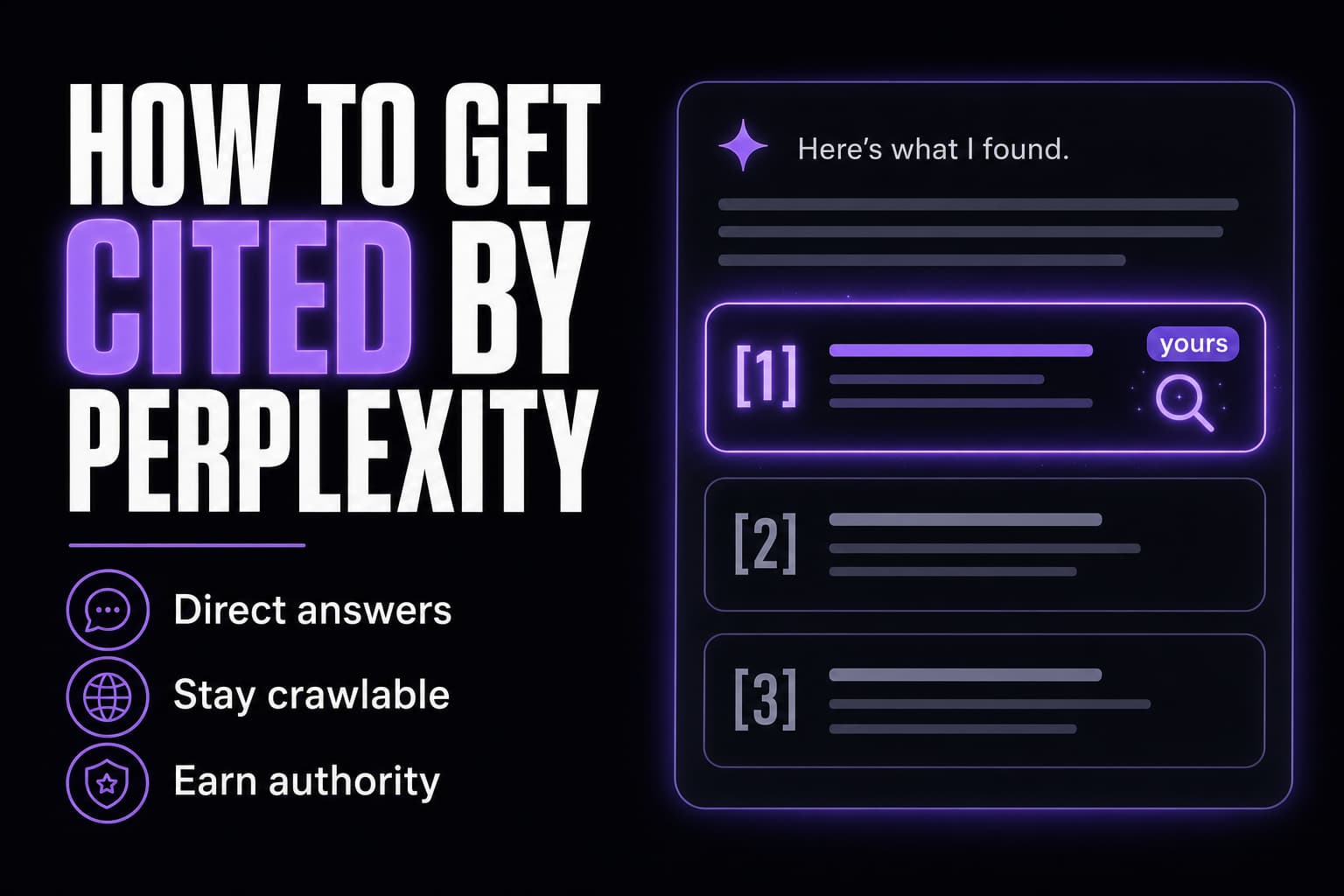
Why Perplexity is the place to start
Unlike a chat that sometimes hides its reasoning, Perplexity is built around citations — almost every answer lists numbered sources inline and at the end. That transparency is a gift for anyone doing GEO: it makes the citation game visible. You can see exactly which domains it pulls from for a query, learn what 'good enough to cite' looks like in your category, and track your progress directly.
Because Perplexity leans heavily on live retrieval, it's also one of the fastest engines to respond to content and technical fixes — making it the ideal proving ground before you generalize your GEO work to ChatGPT and Claude.
What Perplexity rewards
The properties that earn a Perplexity citation are consistent:
- Direct, factual answers — pages that state the answer plainly, with specifics Perplexity can quote, beat vague or promotional pages.
- Freshness — Perplexity favours recent, updated content for anything time-sensitive.
- Crawlability — if PerplexityBot can't fetch your page, you can't be cited; check your robots.txt and rendering.
- Source authority — being referenced by other sites it trusts raises your odds of being pulled in.
- Topical match — content tightly focused on the exact question, not buried in a broad page, is easier to retrieve and cite.
A practical approach
Start by asking Perplexity the real questions in your category and noting which domains it cites — that's your competitive map. For the questions where you're absent, check the obvious blockers first (is PerplexityBot allowed, does the page render server-side, does it answer the question near the top). Then sharpen the matching page: a clear answer up front, facts and figures, structure it can quote. Finally, work the off-site angle — being cited by the sources Perplexity already trusts compounds your authority.
Measure your Perplexity citations over time
Checking once tells you little, because Perplexity's answers vary between runs. To know whether your work is landing, you need to track your citation rate across many runs and over time. CiteLens runs your prompts repeatedly on Perplexity (alongside ChatGPT and Claude), reports how often your domain is cited with a confidence interval, and shows which competitors are cited instead — turning Perplexity's transparency into a metric you can actually manage.
Alper Tekin is the founder of CiteLens, a GEO and AI-visibility platform. He researches how AI engines like ChatGPT, Perplexity, Claude and Google's AI Overviews decide which brands to recommend and which sources to cite, and writes about generative engine optimization based on original data.